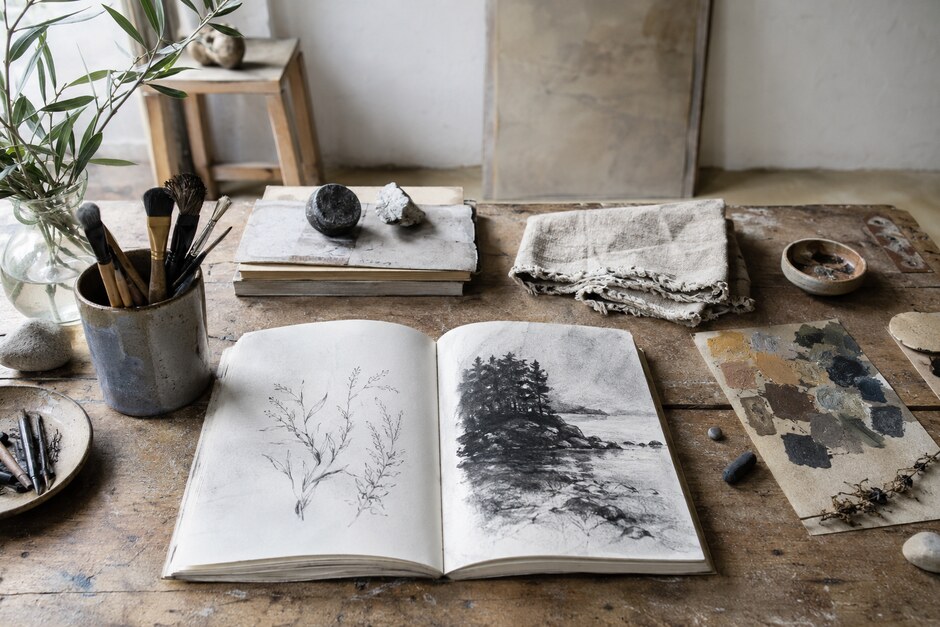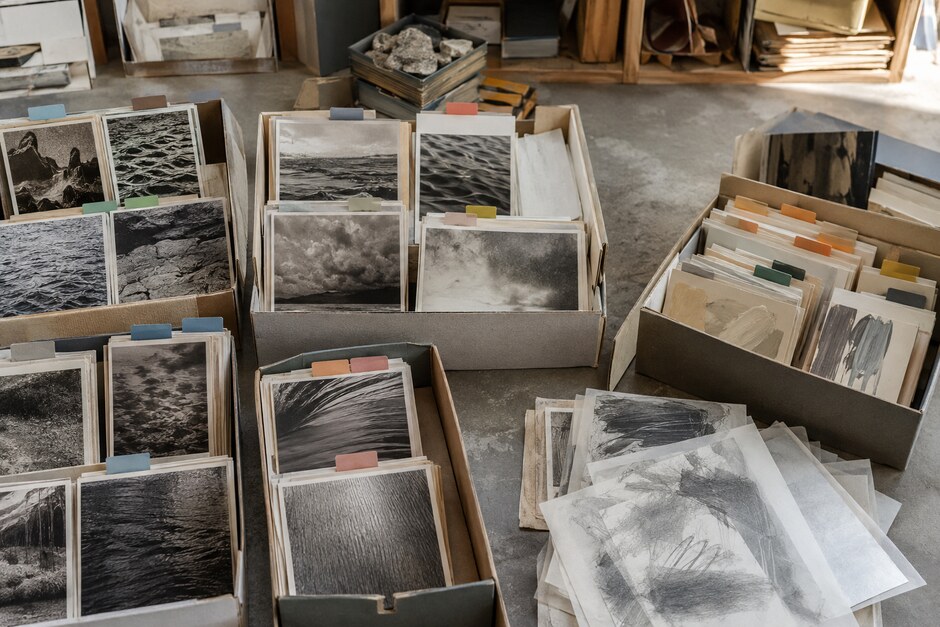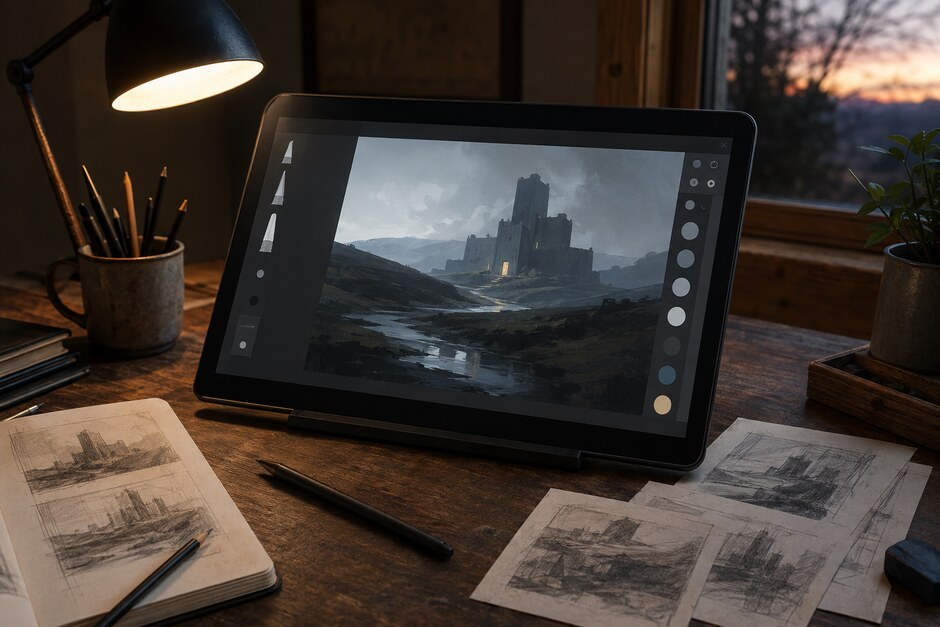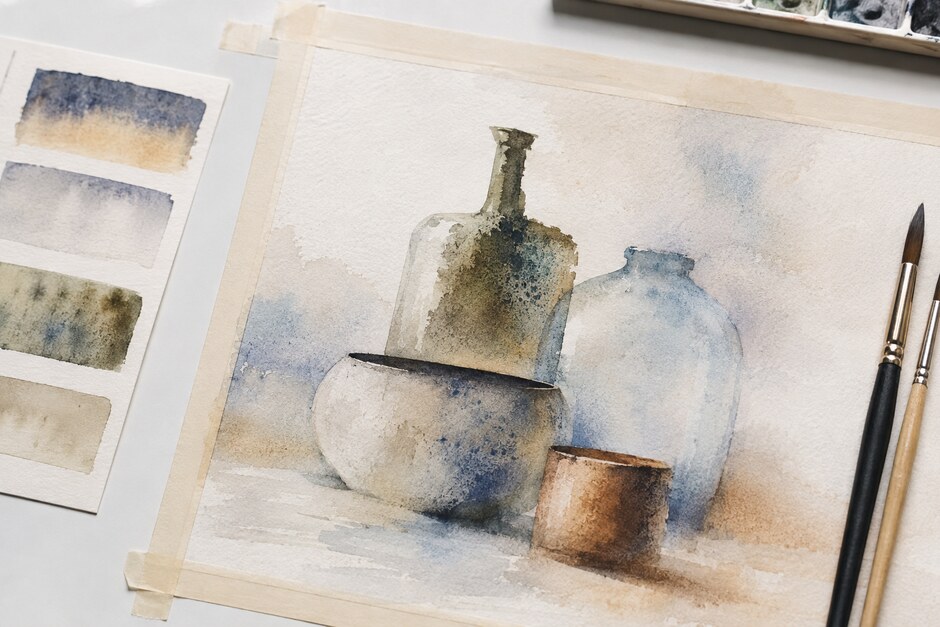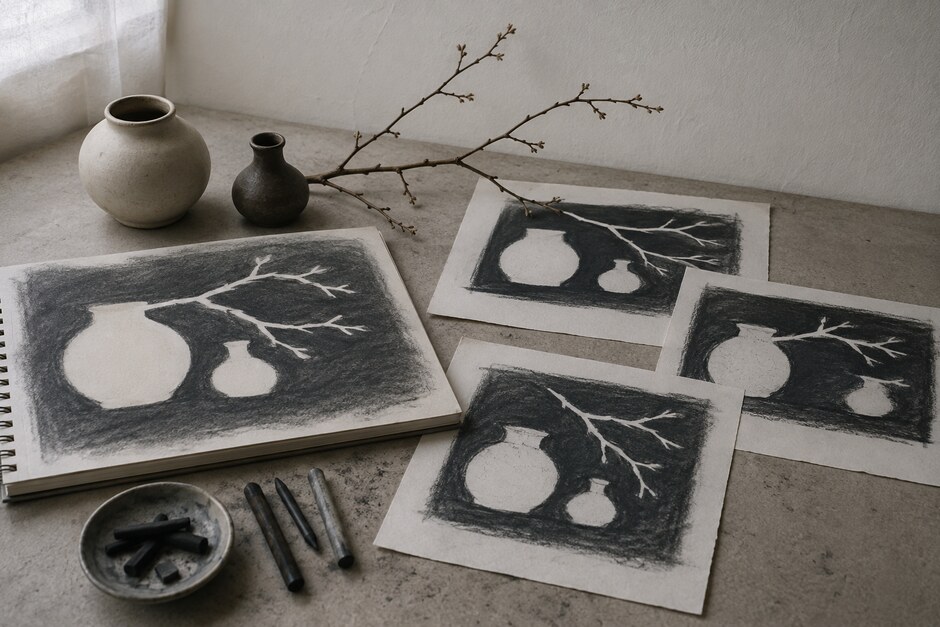
An artist workbench with charcoal studies, natural objects, brushes, linen, and restrained colour swatches.

philipbittner.com

Practical studio notes on seeing, colour, composition, materials, and the small decisions that make visual work clearer.

Frequently Asked Questions

  • 1What does this studio journal focus on?
    It focuses on observable decisions: shape, interval, value, colour, edge, crop, material behaviour, and the working systems that make those decisions easier to compare.
  • 2Do I need to follow a fixed programme?
    No. Each article stands alone. Try one exercise, record what changed, and repeat it only when the question is relevant to your current work.
  • 3Do I need specialised materials?
    Usually not. The guides favour ordinary pencils, paper, paint, a tablet, or simple objects already available in a studio. Any important limitation is explained in the article.
  • 4Can the exercises move between media?
    Yes. A question about spacing, value grouping, or edge hierarchy can be tested with charcoal, watercolour, collage, oils, or digital tools. The visual relationship matters more than the brand of tool.
  • 5How should I use a guide?
    Read for the main question, complete the smallest useful test, and save one sentence about the result. A comparison you can revisit is more valuable than a page of passive notes.

Make the next decision visible

philipbittner.com is a practical field guide for artists who learn by testing. Each article isolates one visual problem—an interval, a neutral, an edge, a crop, or a working habit—and turns it into a compact studio experiment.

The aim is not to prescribe a style. It is to help you compare choices, keep useful evidence, and return to the work with a sharper question.