Plan a Plein-Air Painting in Twelve Tiny Thumbnails
Outdoor scenes offer too much information and too little time. The light moves, clouds alter the value pattern, and interesting details appear in every direction. Beginning immediately on a larger surface often locks the first accidental crop into the whole painting.
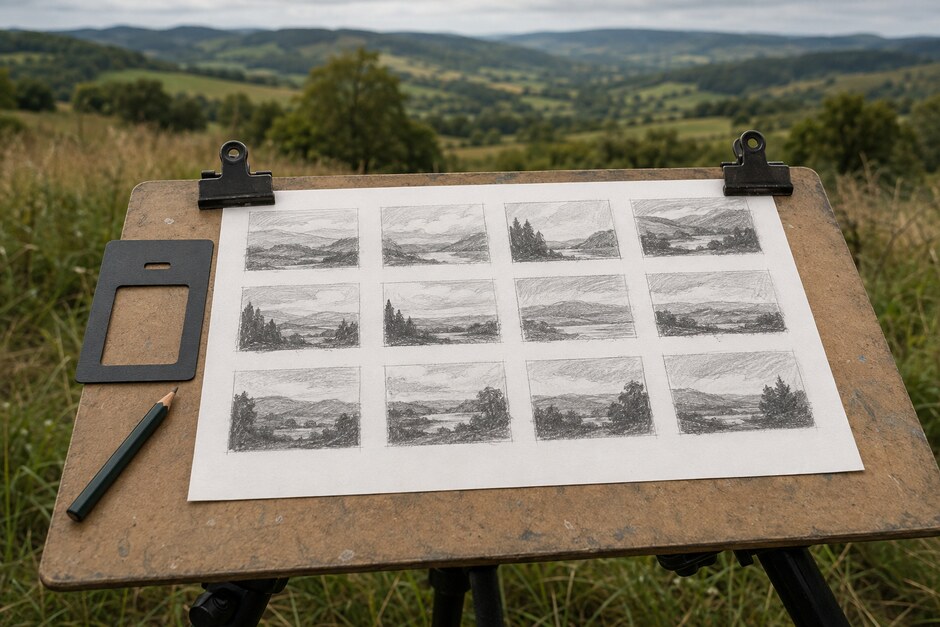
Twelve tiny thumbnails create a fast buffer between seeing and committing. They are small enough to finish while conditions remain recognisable and numerous enough to reveal options you would miss in a single sketch.
Carry a minimal planning kit
You need one sheet of paper, a soft pencil or dark marker, a viewfinder, and two clips. Divide the sheet into twelve rectangles before leaving home. Keep each box roughly the proportions of your intended painting, but no wider than the span of two fingers.
A pre-divided sheet removes the temptation to enlarge the first promising idea. Every box receives the same small amount of attention.
Spend one minute simply looking
Before drawing, turn slowly and identify three broad features: the largest light group, the largest dark group, and the strongest directional movement. Do not search for a subject name. A shadow crossing a path may be more useful than the building that casts it.
Use the viewfinder to test where forms enter and leave the frame. Move it closer to your eye for a wider view and farther away for a tighter crop.
Use the first row for crops
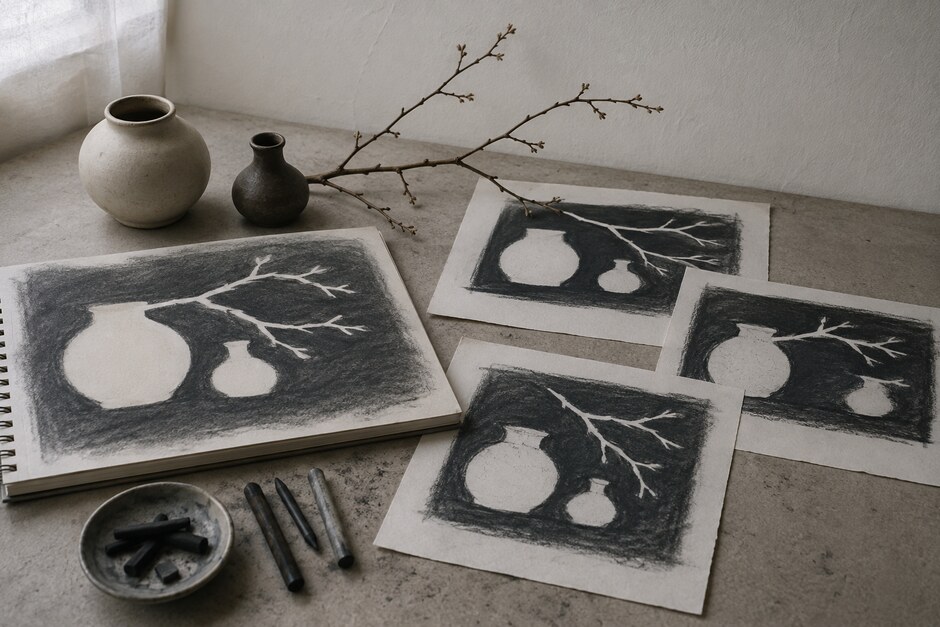
In thumbnails one through four, keep the value pattern simple and change only the crop. Try a low horizon, a high horizon, a close vertical interruption, and a broad open version. Fill each box with no more than three values.
Work quickly enough that the marks stay blunt. If you can draw individual windows, you are probably working too large or too slowly.
Use the second row for structure
Choose the strongest crop and repeat it four times. Now test different ways to connect the dark shapes. Can the foreground shadow lead toward the middle distance? Can two separate trees read as one mass? Does breaking a dark group create a useful pause or unnecessary noise?
This row is about pathways for the eye. The subject remains the same, but the organisation changes.
Use the third row for emphasis
In the final four boxes, move the strongest contrast to different locations. Put it near the main subject, at the edge of a path, in the sky opening, and somewhere deliberately unexpected. Compare how each choice changes the story of the view.
Mark the version that reads clearly at arm’s length. A thumbnail that only works up close will become fragile when translated into paint.
Write a one-sentence plan
Turn the selected thumbnail into a short instruction: “Keep the foreground broad and quiet; save the sharp light for the roof,” or “Connect the tree shadows and let the distant hill dissolve.” The sentence becomes a filter when the light changes.
It also prevents the larger painting from becoming a catalogue of everything visible. New details are accepted only if they support the plan.
Mix and block from the thumbnail
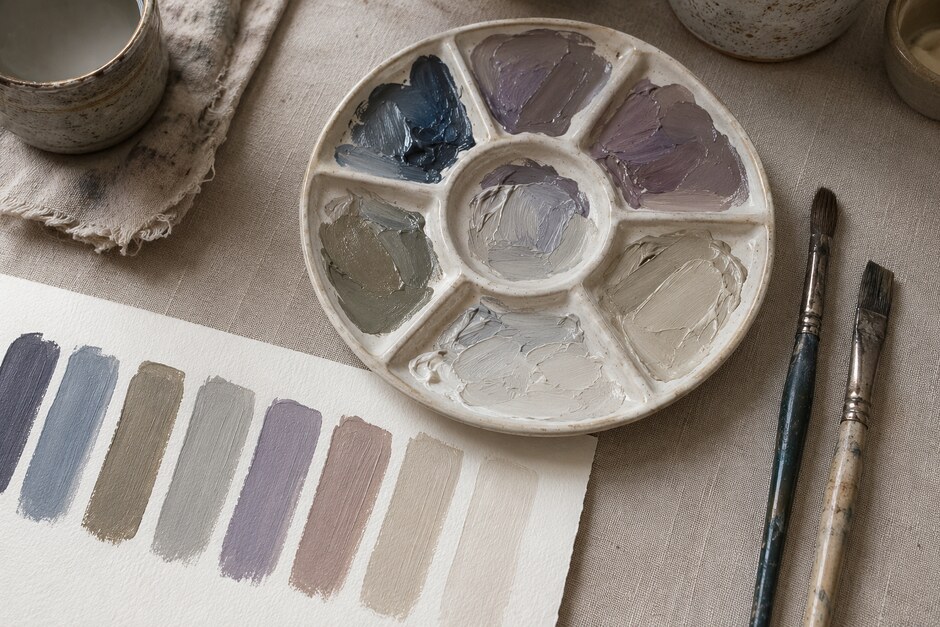
On the larger surface, place the horizon and the main value division first. Mix a small set of related colours before chasing local variation. The neutral-family approach in Mixing Quiet Colours helps keep a rapidly changing landscape inside one atmosphere.
Cover the surface with the three major value groups. Step back, compare the painting to the thumbnail, and correct the grouping before adding smaller shapes.
Let changing light become evidence
If the light shifts dramatically, avoid repainting the entire scene to match the newest condition. Make a thirteenth thumbnail beside the original twelve and record the new pattern. You can decide later whether it deserves a separate painting.
This turns changing weather from a disruption into a second idea. It also builds a useful record of how one place behaves over time.
Review the sheet at home
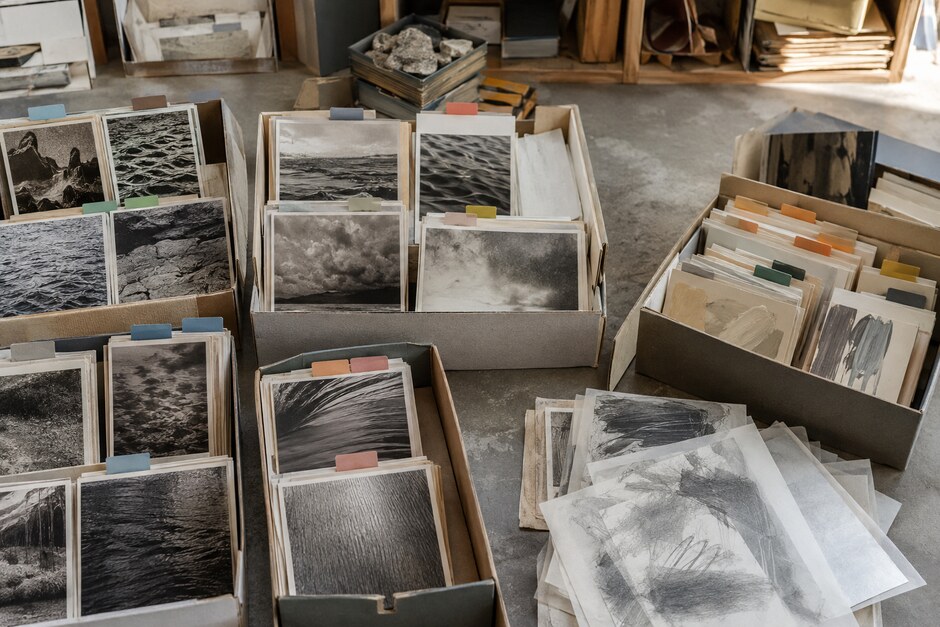
Do not discard the unsuccessful boxes. Circle the two that fail most clearly and write why: equal intervals, scattered darks, divided focal points, or an unhelpful tangent. Store the sheet under composition or landscape planning in the system from Build a Personal Reference Library.
Twelve thumbnails may take fifteen minutes, but they save far more time than they cost. More importantly, they make the final painting a choice rather than a reaction to the first view that happened to catch your attention.