Build a Personal Reference Library That Actually Helps You Make Art
Artists rarely suffer from a shortage of images. The problem is retrieval. Screenshots disappear into camera rolls, colour tests sit in unlabeled folders, and useful failures are thrown away because they are not finished work.
A working reference library is not a museum of things you admire. It is a tool that helps answer a question while you are making something.
Organise by problem, not by prestige
Begin with broad folders that describe visual decisions: light, edges, grouping, movement, colour relationships, surfaces, space, and process. Add subject folders only when they support recurring work, such as hands, industrial interiors, coastal weather, or folded fabric.
A photograph of a stairwell may belong under reflected light rather than architecture. A failed painting may belong under compressed values. Ask how you expect to retrieve the item, not what the item happens to depict.
Keep three kinds of source
Build the library from material you can use responsibly:
- Direct observation: your photographs, location sketches, notes, and measured colour samples.
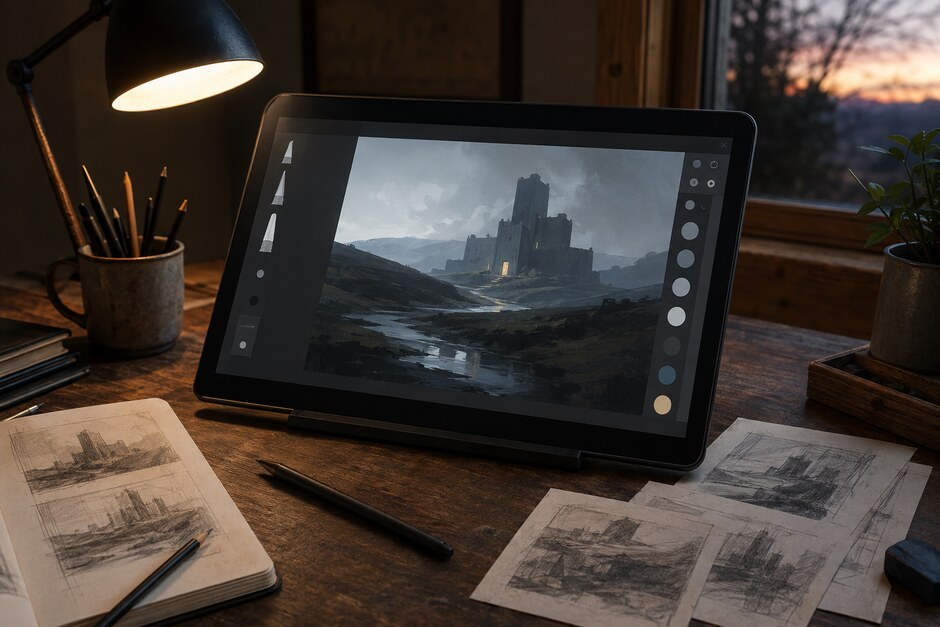
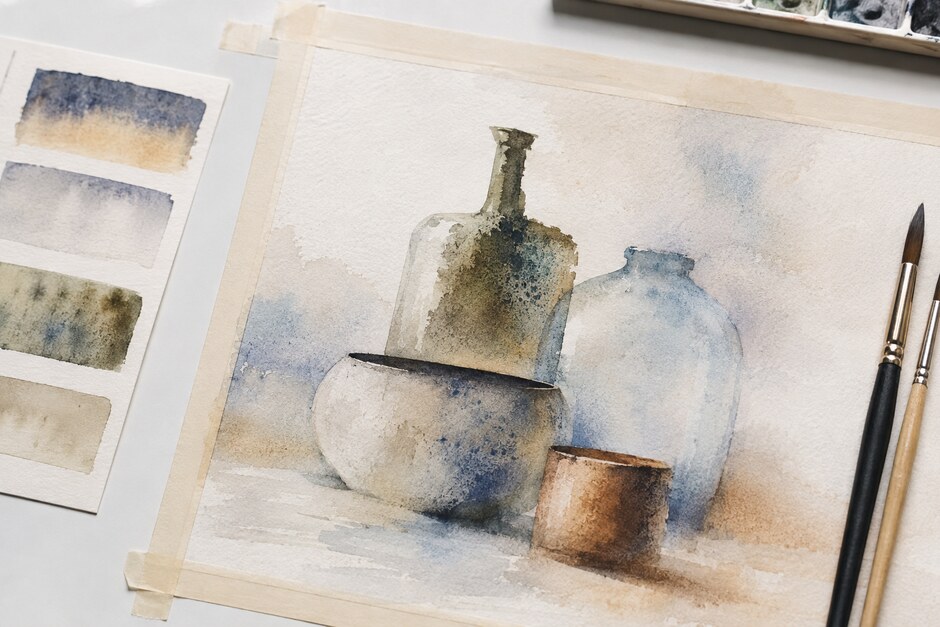
- Studio evidence: thumbnails, tests, abandoned passages, brush samples, and process exports.
- Published reference: links or low-resolution study copies with creator, title, collection, and source recorded.
Keeping source information attached prevents a useful research habit from turning into accidental copying or lost attribution.
Make every saved item earn a sentence
When you add an image, write one short reason: “blue reflected light keeps the shadow open,” “three large darks connect across the frame,” or “dry brush breaks the edge without outlining it.” The sentence converts admiration into an observation.
If you cannot say why an image matters, leave it in a temporary inbox rather than filing it permanently. Review that inbox once a month and delete freely.
Use physical and digital versions together
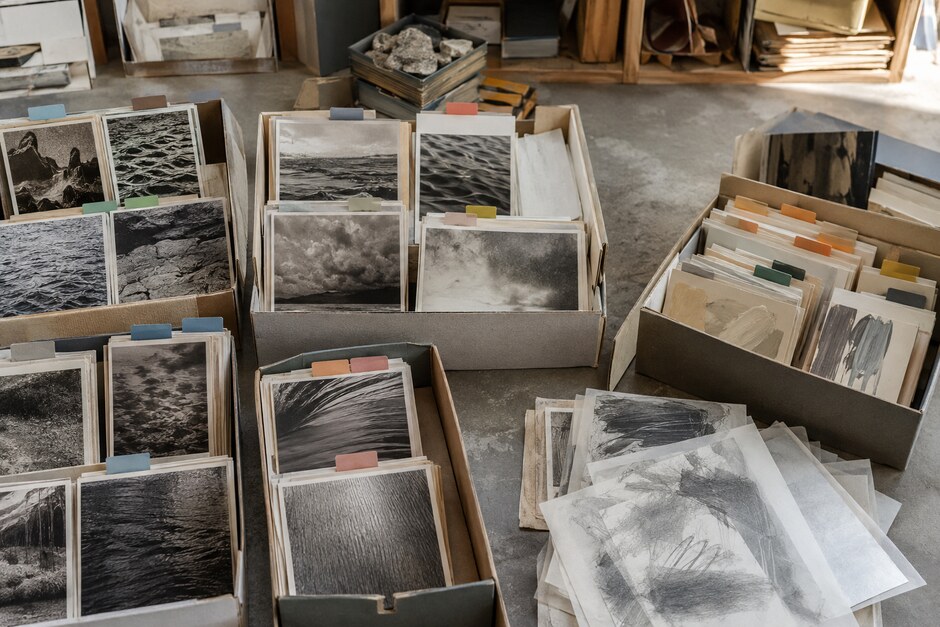
Digital folders are excellent for search, duplication, and links. Physical cards are better for seeing several references at once without opening windows. Print only the most reusable items at a modest size and write the source plus observation on the back.
Store cards in shallow boxes with coloured tabs. Keep actual paint swatches and textured samples in protective sleeves so their material qualities remain available.
Create project trays
When starting a piece, pull a small temporary set from the main archive: one reference for light, one for spatial structure, one for colour proportion, one for material behaviour, and your own subject reference. This becomes a project tray.
Limiting the tray prevents ten attractive images from pulling the work in ten directions. The references should have distinct jobs.
Archive exercises as evidence
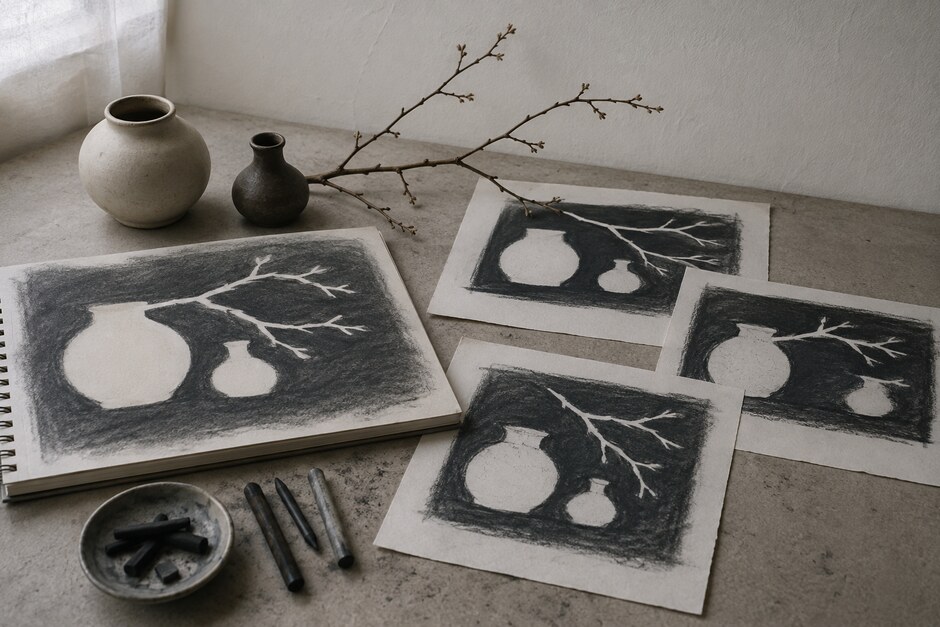
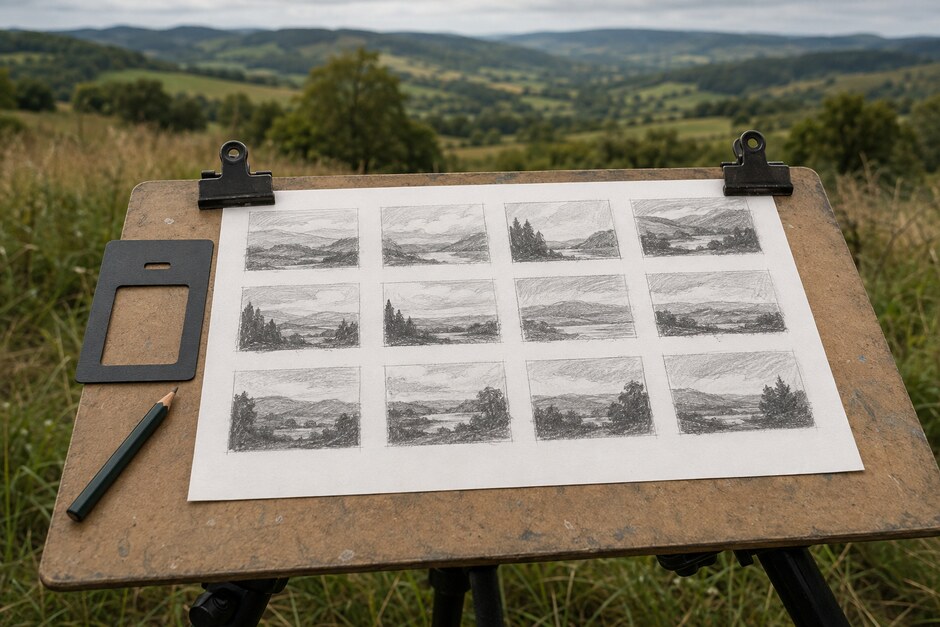
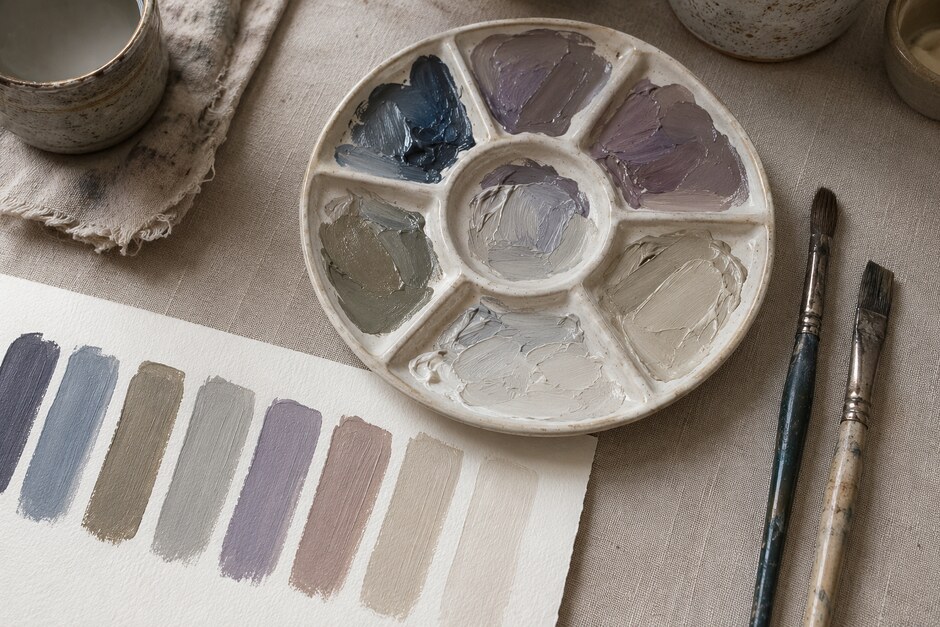
A practice sheet is valuable when it records a comparison. Keep the four negative-shape variations from Drawing the Space Between Things, the twelve compositions from Plan a Plein-Air Painting, or the dried mixtures from Mixing Quiet Colours.
Write the date, materials, and one result. This is enough metadata to make the sheet useful later without turning studio practice into administration.
Review by recurrence
Every few months, look for repeated observations. If many references mention lost edges, your next study cycle has already suggested itself. If a folder remains large but never enters a project tray, it may contain inspiration rather than working reference. Move it to a separate collection or remove it.
The archive should become smaller and more specific as your questions sharpen.
Protect the difference between reference and recipe
Reference should inform separate decisions, not provide a finished image to reproduce. Combine information from multiple sources, change the subject, and return to direct observation whenever possible. A source for lighting does not also need to dictate pose, crop, palette, and surface.
This separation keeps the final work from inheriting another image’s entire structure.
Use a five-minute retrieval test
Choose a current problem—softening a background, organising a crowd, mixing a dark green—and give yourself five minutes to find three relevant items. If retrieval fails, rename folders using the words you naturally searched for. A library should adapt to your language rather than forcing you to remember an elaborate taxonomy.
The best archive does not prove how much you have collected. It returns a useful observation at the moment a painting needs it. Save less, describe why it matters, and let repeated studio questions shape the system.